
Introduction
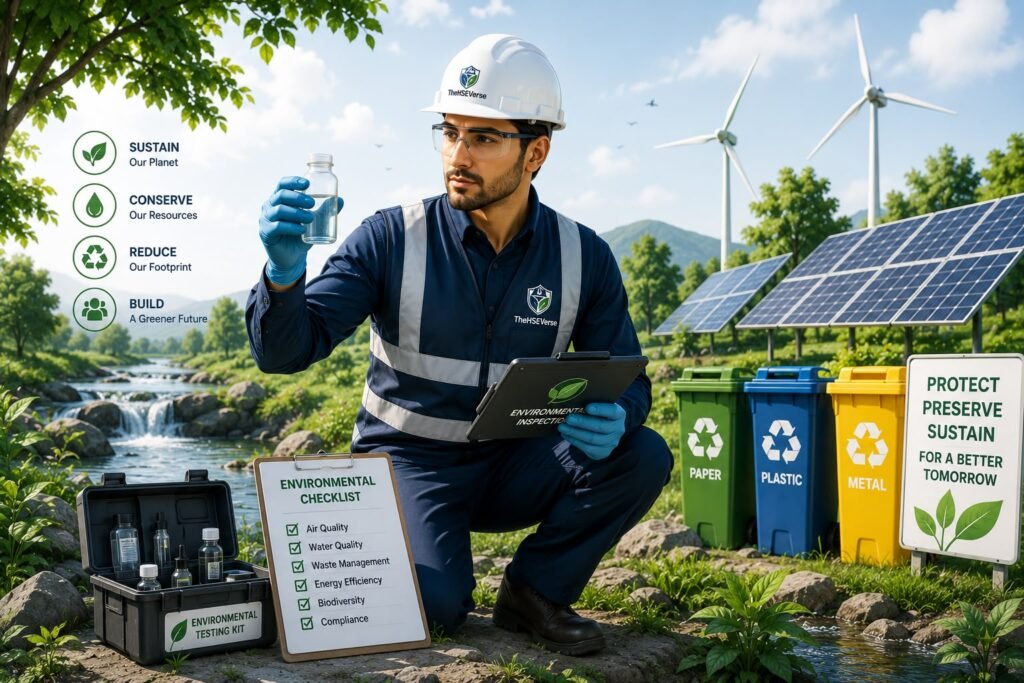
Sustainable workplace practices are no longer optional—they are a core operational responsibility. Organizations today are expected to manage environmental impact with the same discipline applied to safety and quality
In practice, the challenge is not awareness, but consistent execution at site level.
This article outlines practical, field-driven sustainable workplace practices that help organizations:
- Reduce environmental impact
- Maintain compliance
- Improve operational efficiency
Table of Contents
- What Are Sustainable Workplace Practices?
- Why Environmental Sustainability Matters
- Conducting Environmental Risk Assessments
- Effective Waste Management Practices
- Energy Efficiency in Sustainable Workplace Practices
- Water Conservation Strategies
- Pollution Prevention and Control
- Sustainable Procurement Practices
- Employee Environmental Awareness
- Measuring Environmental Performance
- Key Takeaways
- FAQs
- Conclusion
1. What Are Sustainable Workplace Practices?
A sustainable workplace is one that controls environmental impact while maintaining performance and compliance.
It is reflected in daily operations through:
- Efficient resource use
- Waste control
- Pollution prevention
Example:
On a construction site, this includes proper waste segregation, dust control, and efficient fuel usage.
2. Why Environmental Sustainability Matters
Environmental performance directly affects:
- Regulatory compliance
- Project approvals
- Costs
- Reputation
Poor environmental control leads to:
- Penalties
- Delays
- Loss of client confidence
From a leadership standpoint:
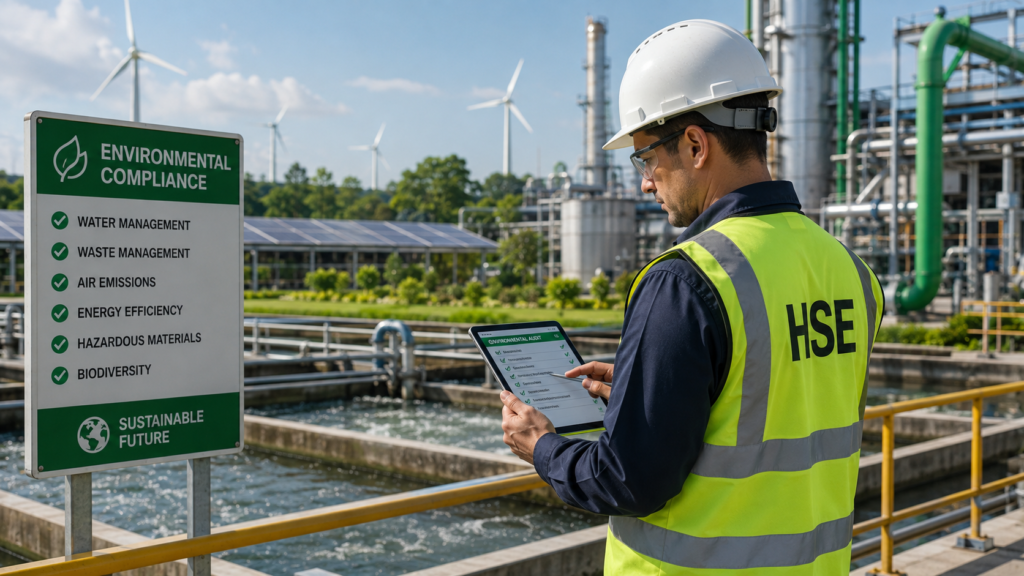
Sustainability is fundamentally risk management and aligns with global standards such as ISO 14001 Environmental Management Systems (see official ISO guidance: ISO 14001 overview)
3. Conducting Environmental Risk Assessments
This is a critical step in implementing sustainable workplace practices effectively.
Key Steps
- Identify environmental aspects
- Evaluate impacts
- Apply controls
Common Site Risks
- Dust emissions
- Waste generation
- Fuel and chemical storage
- Noise and contamination
Best Practice:
Integrate environmental risks into planning and daily operations, not just documentation.
4. Effective Waste Management Practices
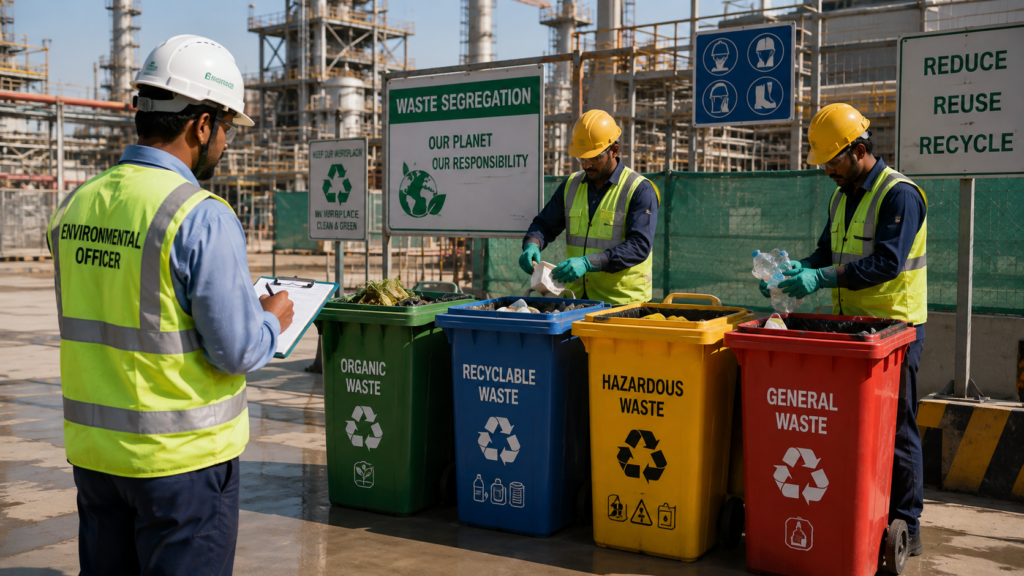
Waste management is one of the most visible indicators of sustainable workplace practices.
Waste Hierarchy
- Reduce
- Reuse
- Recycle
- Recover
- Dispose
Practical Actions
- Segregated waste bins
- Recycling systems
- Controlled hazardous waste storage
Key Issue:
Systems fail without training and enforcement.
5. Energy Efficiency in Sustainable Workplace Practices
Energy efficiency reduces both environmental impact and cost.
Practical Measures
- LED lighting
- Switching off idle equipment
- Preventive maintenance
- Use of efficient systems
Insight:
Small inefficiencies across operations create significant losses over time.
6. Water Conservation Strategies
Water is often underestimated in environmental planning.
Practical Measures
- Routine leak checks
- Efficient fixtures
- Controlled usage
- Reuse where possible
Example:
Optimizing water use for dust suppression on construction sites.
7. Pollution Prevention and Control
It is also a core element of strong sustainable workplace practices.
Key Controls
- Dust suppression
- Spill prevention
- Safe chemical handling
- Fuel storage management
Example:
Fuel storage areas should include containment and spill response systems.
8. Sustainable Procurement Practices
Environmental impact begins at procurement.
Best Practices
- Select responsible suppliers
- Reduce packaging
- Choose sustainable materials
Leadership View:
Procurement decisions define downstream environmental performance.
9. Employee Environmental Awareness
Workforce behavior directly impacts environmental outcomes.
Practical Methods
- Toolbox talks
- Awareness campaigns
- Reporting systems
Common Gap:
Environmental rules are often treated as less critical than safety—this must change.
10. Measuring Environmental Performance
Performance must be measurable.
Key Indicators
- Waste generation
- Energy use
- Water consumption
- Environmental incidents
Best Practice
- Set targets
- Conduct audits
- Track trends
Insight:
Environmental KPIs should be reviewed alongside safety metrics.
Key Takeaways
- Sustainability must be operational, not theoretical
- Risk assessment is the foundation
- Waste management requires enforcement
- Energy and water efficiency reduce costs
- Prevention is better than correction
- Workforce engagement is essential
- Measurement drives improvement
FAQs
What are sustainable workplace practices?
A workplace that minimizes environmental impact while maintaining efficiency and compliance.
Why is environmental management important?
It reduces risk, ensures compliance, and improves performance.
What is the first step?
Conducting an environmental risk assessment.
How can waste be reduced?
By applying the waste hierarchy and enforcing segregation.
How do employees contribute?
Through awareness, compliance, and reporting.
Conclusion
Sustainable workplace practices are built through consistent execution, not policy alone. Environmental management should be treated as a core operational function, fully integrated into planning, supervision, and daily activities. Organizations that do this effectively achieve not only compliance, but also efficiency, credibility, and long-term resilience.
🔍 Explore More HSE Resources
Take your safety practices to the next level with our expert guides and tools:
- Risk Assessment Templates
- Toolbox Talk Topics
- Safety Checklists
- TheHSEVerse Academy
- Latest HSE Job Opportunities