
1. Introduction & Overview
Electrical work and electrical equipment are common on construction and industrial sites, but unsafe practices can cause electric shock, burns, fires, equipment damage, and serious or fatal injuries. This toolbox talk highlights seven essential electrical safety tips workers should follow before and during work.
2. Key Hazards of Electrical Work
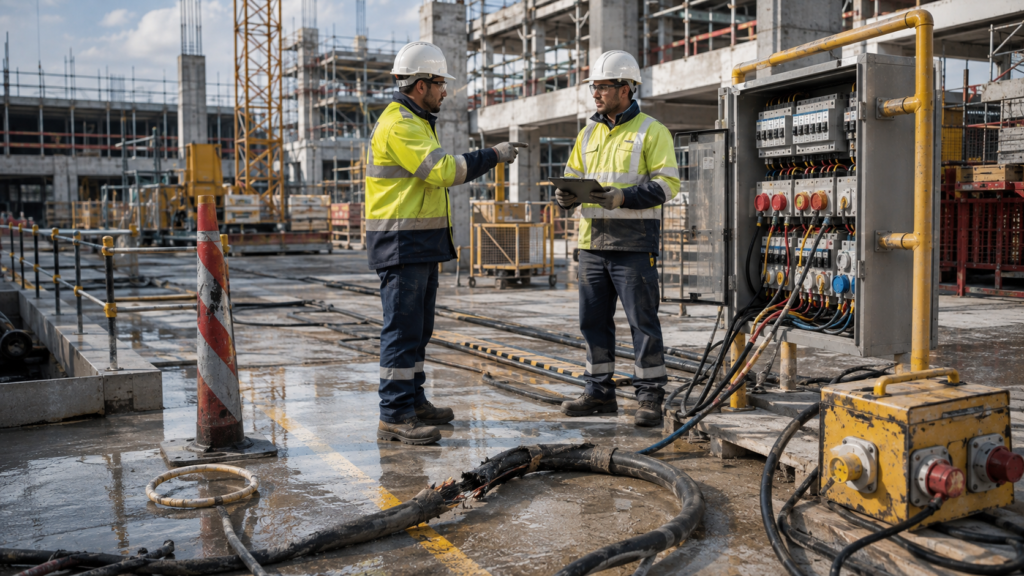
- Contact with exposed or energized electrical conductors.
- Damaged cables, plugs, sockets, or electrical tools.
- Overloaded circuits or improper temporary electrical connections.
- Using electrical equipment in wet or unsuitable conditions.
- Unauthorized electrical work or repairs.
- Contact with overhead or underground electrical services.
- Electrical fires caused by damaged equipment, overloading, or poor connections.
3. 7 Essential Electrical Safety Tips
1. Inspect Electrical Equipment Before Use
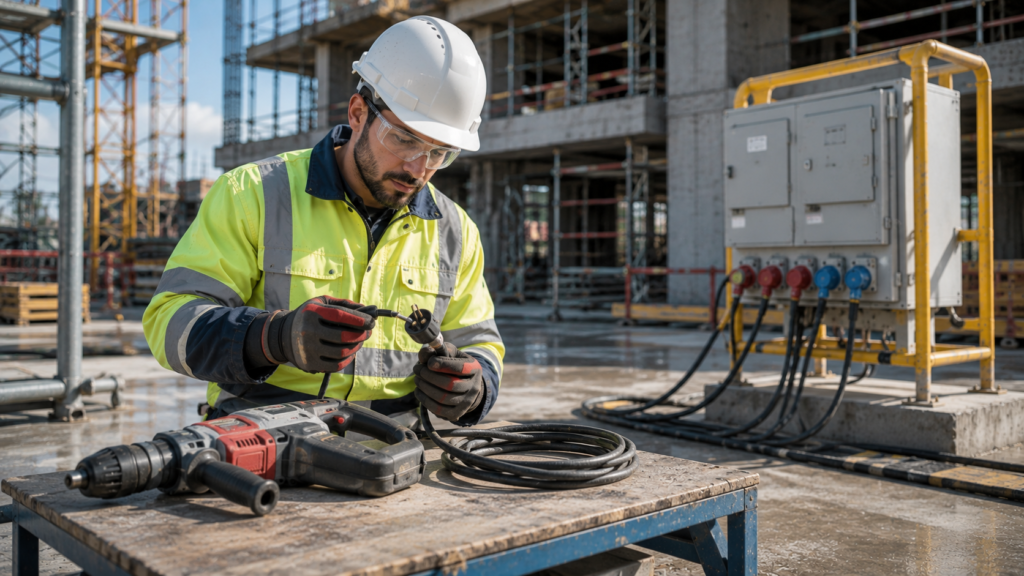
Check cables, plugs, sockets, tools, and equipment for damage, exposed wires, cuts, or loose connections. Remove defective equipment from service and report it.
2. Use Only Authorized and Competent Personnel
Electrical installation, maintenance, testing, and repair must only be performed by personnel who are competent and authorized for the work.
3. Keep Electricity Away from Water
Protect electrical equipment, connections, and cables from water and wet conditions. Do not use unsuitable electrical equipment in wet areas.
4. Prevent Overloading
Do not overload sockets, extension leads, distribution boards, or circuits. Use properly rated electrical equipment and approved connections.
5. Isolate Before Maintenance
De-energize electrical equipment before maintenance or repair and follow the approved Lockout/Tagout (LOTO) procedure where applicable. Never assume equipment is safe simply because a switch is off.
6. Maintain Safe Distance from Electrical Services
Identify overhead and underground electrical services before starting work. Maintain the required clearance from overhead lines and verify underground services before excavation.
7. Never Bypass Electrical Protection
Do not remove, bypass, or modify protective devices. Keep electrical panels accessible and report damaged or unsafe installations immediately.
4. Required Personal Protective Equipment (PPE)
- Safety helmet appropriate to the electrical hazard.
- Suitable safety footwear.
- Electrical-rated insulating gloves where required.
- Safety glasses or suitable eye/face protection where required.
- Arc-rated clothing and additional electrical PPE where specified by the risk assessment.
PPE must be selected according to the task, hazard assessment, and applicable requirements. PPE is a supplementary control and does not replace isolation, guarding, or other primary controls.
5. Emergency & Incident Reporting
- Stop work and report exposed conductors, damaged equipment, sparks, smoke, or electrical faults immediately.
- Do not touch a person who may still be in contact with an energized electrical source.
- Isolate the electrical supply through the appropriate emergency procedure only when safe and authorized.
- Raise the alarm and contact the site emergency response team.
- Do not attempt unauthorized electrical rescue or repair.
- Report electrical shocks, fires, arc-flash events, and near misses to the supervisor/HSE team immediately.
Key Safety Message
Inspect before use. Isolate before maintenance. Never bypass protection. Treat every electrical hazard seriously.
Worker Discussion Questions
- What electrical hazards can you see in our current work area?
- What signs indicate that electrical equipment is unsafe?
- Who is authorized to perform electrical work?
- What should you do if you find an exposed conductor?
- What must happen before electrical equipment is repaired?
- What should you do if electrical equipment becomes wet?
- When should you stop electrical work and notify your supervisor?
Electrical Safety Standards & Guidelines
For additional electrical safety guidance, consult recognized authoritative sources:
- OSHA – Electrical Safety
- OSHA – Electrical Standards
- NIOSH – Electrical Safety
- HSE UK – Electrical Safety at Work
Download Electrical Safety Toolbox Talk
Use this practical Toolbox Talk during daily or weekly safety briefings. The downloadable versions include the same core safety content together with an attendance/sign-off section for workplace use.
Download:
Explore More Toolbox Talks
- Working at Height Toolbox Talk – Learn essential safe working practices for preventing falls and controlling hazards when working at height.
- Ladder Safety Toolbox Talk – Learn how to identify ladder hazards, inspect ladders, and follow safe ladder-use practices to prevent falls.