
Electrical work is an essential part of construction, maintenance and facility operations but can expose workers to serious hazards when electrical energy, equipment condition, isolation procedures and work methods are not properly controlled. Electric shock, electrocution, arc flash, burns, electrical fires and unexpected energization can result in severe injuries, fatalities, equipment damage and significant project disruption.
This Electrical Work Risk Assessment provides a practical reference for identifying common hazards associated with electrical activities, evaluating the level of risk and establishing appropriate control measures before and during electrical work.
The completed assessment can be adapted to suit different construction projects, electrical systems, voltage levels, equipment, work environments and electrical tasks.
What Does This Risk Assessment Cover?
The assessment addresses common electrical-work hazards, including:
- Contact with energized electrical parts
- Electric shock and electrocution
- Arc flash and arc blast
- Electrical burns
- Electrical fires and overheating
- Unexpected energization
- Failure to isolate electrical energy
- Incorrect Lockout/Tagout (LOTO)
- Stored electrical energy
- Short circuits and electrical faults
- Damaged cables and electrical connections
- Defective electrical tools and equipment
- Temporary electrical installations
- Improper grounding and bonding
- Overloaded circuits and distribution boards
- Work near overhead electrical lines
- Work near underground electrical services
- Wet or conductive working environments
- Portable electrical equipment
- Extension leads and temporary cables
- Electrical testing and commissioning
- Unauthorized or unqualified electrical work
- Poor housekeeping around electrical installations
- Simultaneous construction activities
- Emergency response to electrical incidents
The assessment considers hazards affecting electricians, electrical technicians, engineers, supervisors, contractors, maintenance personnel and other workers who may be exposed to electrical energy.
What Is Included?
The full risk assessment document includes:
- Document and assessment information
- Purpose and scope
- Persons at risk
- Electrical work control principles
- Activities and equipment covered
- Risk assessment methodology
- 5 × 5 risk matrix
- Detailed electrical-work hazards
- Existing control measures
- Further control measures
- Initial risk ratings
- Residual risk ratings
- Responsible persons
- Electrical isolation requirements
- Lockout/Tagout controls
- Inspection and testing requirements
- Review triggers
- PPE requirements
- Emergency and rescue arrangements
- Roles and responsibilities
- Worker acknowledgement
- Review and approval section
- Professional disclaimer
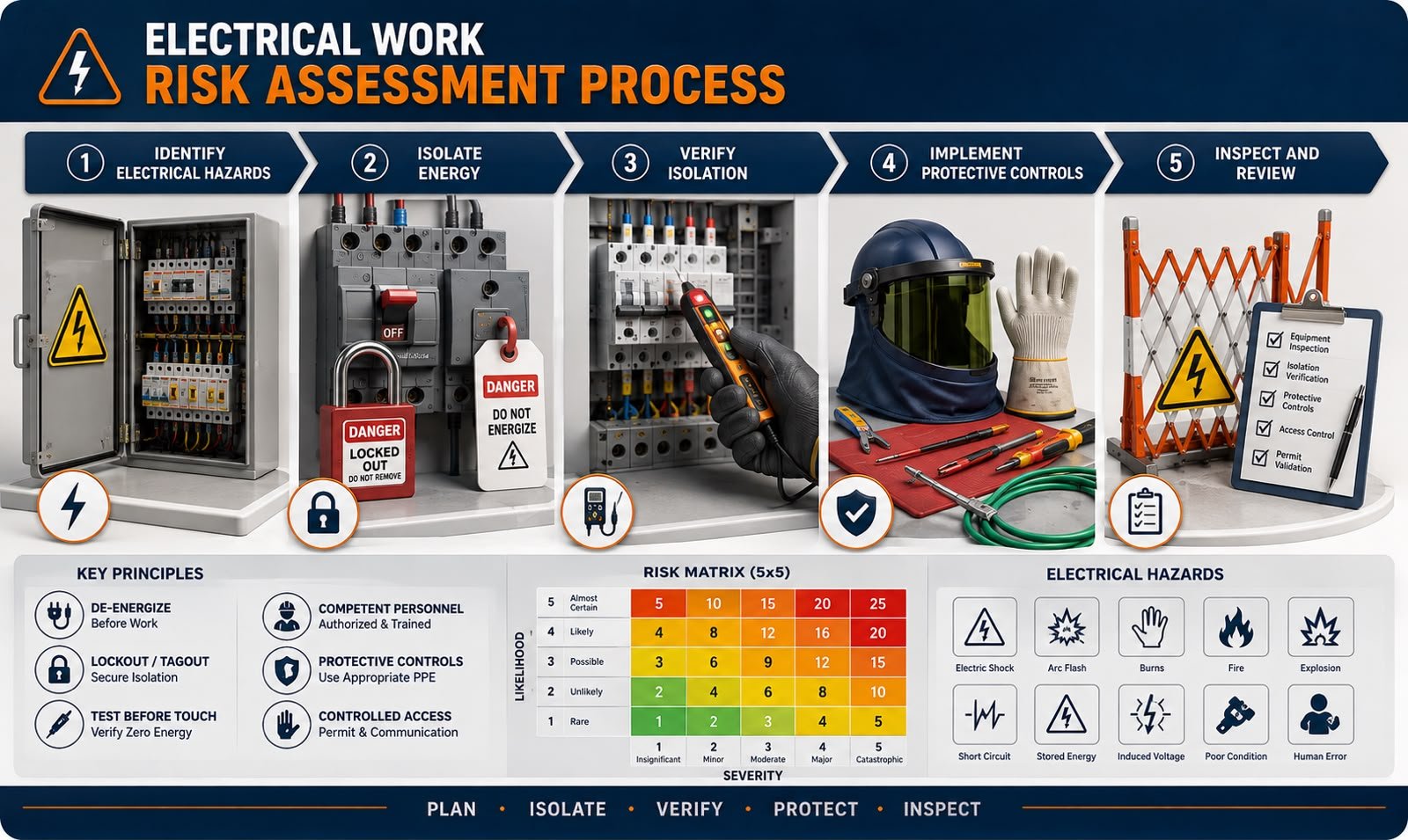
The assessment emphasizes electrical isolation, competent personnel, verification of dead conditions, suitable electrical equipment, grounding and bonding, controlled access, appropriate PPE and safe working practices.
How to Use This Risk Assessment
Before electrical work begins, the assessment should be reviewed by a competent person and considered alongside the electrical method statement, permit-to-work requirements, isolation procedure, drawings, equipment information and applicable project requirements.
The electrical work should be planned according to the voltage level, electrical system, equipment condition, energy sources, work environment, task requirements, isolation points and potential exposure to energized components. Wherever reasonably practicable, electrical equipment should be de-energized before work begins.
An effective isolation procedure should identify all relevant energy sources, isolate the equipment, prevent unauthorized re-energization and verify that the equipment is de-energized before work starts. Lockout/Tagout controls should be applied where required by the project procedure.
Electrical tools, cables, plugs, distribution boards and portable equipment should be inspected before use. Damaged or defective equipment should be removed from service and repaired or replaced by authorized personnel.
Only competent and authorized personnel should perform electrical installation, testing, maintenance, troubleshooting or repair activities requiring electrical competence. Workers should maintain appropriate safe distances from energized equipment and overhead electrical lines.
Suitable electrical PPE should be selected according to the specific task and electrical hazard. PPE may include electrical insulating gloves, eye and face protection, arc-rated clothing and other task-specific protective equipment where required.
When Should the Risk Assessment Be Reviewed?
The electrical work risk assessment should be treated as a live document and reviewed whenever the electrical conditions or work method change.
It should be reassessed when the electrical system or equipment changes, voltage or energy levels change, the work location changes, isolation arrangements are modified, new equipment is introduced, temporary power arrangements change or the work method is revised.
The assessment should also be reviewed following an electrical incident, near miss, electric shock, arc-flash event, equipment failure, electrical fire or significant change in the work environment.
Regular inspections should confirm that electrical equipment, temporary installations, cables, distribution boards, isolation points, grounding arrangements, protective devices and other controls remain suitable throughout the work.
Who Can Use This Resource?
This resource can support:
- HSE Managers and HSE Engineers
- Safety Officers and Supervisors
- Electrical Engineers
- Electrical Supervisors
- Electricians and Electrical Technicians
- Maintenance Teams
- Construction Managers
- Site Engineers
- Project Managers
- Contractors and subcontractors
- HSE consultants
- Students and HSE professionals
It can also support the preparation of electrical method statements, task-specific risk assessments, JSA/JHA documents, permit-to-work systems, Lockout/Tagout procedures and electrical safety toolbox talks.
Download the Full Risk Assessment
The complete Electrical Work Risk Assessment is available as an editable DOCX document containing detailed hazards, risk ratings, control measures, responsibilities, electrical isolation requirements, inspection requirements, and emergency arrangements.
Internal Resources
Use relevant TheHSEVerse resources to support the Electrical Work Risk Assessment:
External Guidance
For authoritative electrical safety guidance, you can reference:
Disclaimer
This electrical work risk assessment is provided as a general HSE reference. It does not replace a project-specific risk assessment, method statement, excavation design, permit, or competent-person review. Always adapt it to actual site conditions, applicable requirements, and project-specific hazards before use.