
1. Introduction & Overview
Lifting operations involve significant risks when loads, lifting equipment, or lifting accessories are not properly selected, inspected, or controlled. This lifting operations safety toolbox talk provides workers with practical guidance to identify lifting hazards and follow safe practices during lifting activities.
2. Key Hazards of Lifting Operations
- Falling or dropped loads striking workers or equipment
- Overloading cranes, hoists, or lifting accessories
- Damaged or unsuitable slings, shackles, hooks, or lifting accessories
- Unstable or improperly secured loads
- Workers standing or passing beneath suspended loads
- Poor communication between the lifting team and equipment operator
- Contact with overhead power lines or nearby structures
- Uncontrolled load movement due to wind or other environmental conditions
3. Mandatory Safety Precautions
7 Essential Safety Tips
1. Plan the Lift
Ensure the lifting activity is properly planned, the load weight and lifting requirements are understood, and competent personnel are assigned.
2. Inspect Equipment Before Use
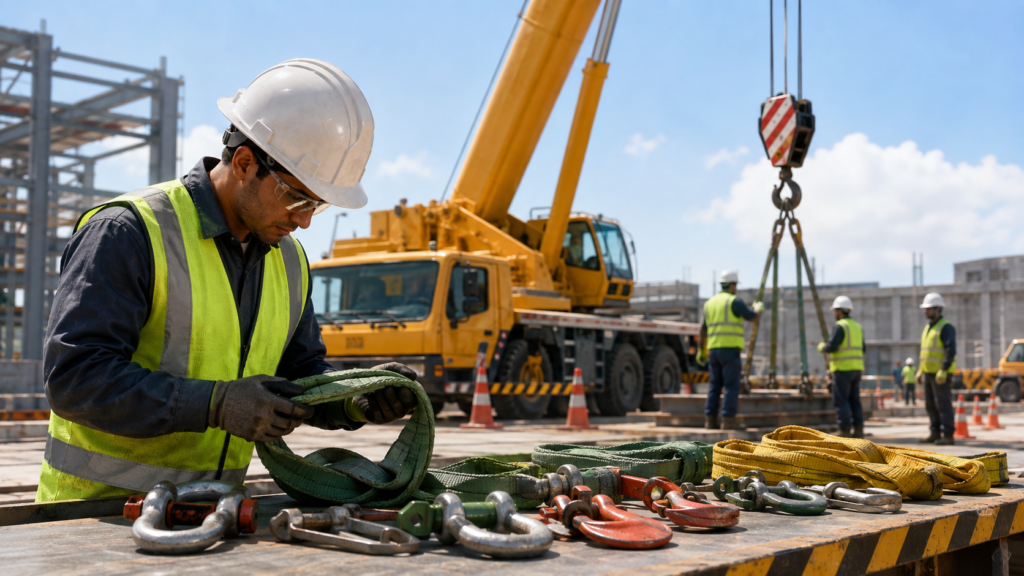
Inspect cranes, hoists, slings, shackles, hooks, and other lifting accessories before use. Do not use damaged or defective equipment.
3. Confirm the Safe Working Load
Never exceed the rated capacity of lifting equipment or accessories. Confirm the load weight and ensure the equipment is suitable for the lift.
4. Secure the Load Properly
Ensure the load is correctly attached, balanced, and secured before lifting. Use suitable lifting accessories for the load and lifting arrangement.
5. Establish an Exclusion Zone
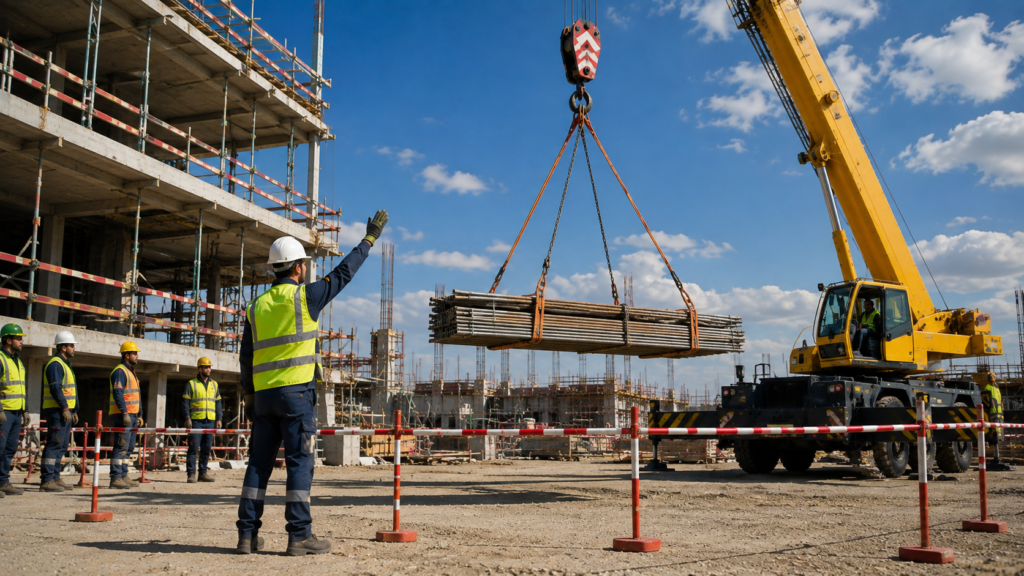
Keep unauthorized personnel away from the lifting area. Never allow workers to stand or pass beneath a suspended load.
6. Maintain Clear Communication
Use an agreed communication system between the operator, banksman/signalman, and lifting team. Only designated personnel should give signals to the operator.
7. Stop When Conditions Become Unsafe
Stop the lifting operation if equipment is defective, the load becomes unstable, communication is lost, weather conditions become unsafe, or any person enters the exclusion zone.
4. Required Personal Protective Equipment (PPE)
- Safety helmet with chin strap where required
- Safety footwear with suitable slip-resistant soles
- High-visibility vest or clothing
- Protective work gloves suitable for handling lifting accessories
- Safety glasses where required by the task or risk assessment
PPE shall be selected according to the task-specific risk assessment and applicable site requirements. PPE does not replace proper lift planning, equipment inspection, exclusion zones, or other primary controls.
5. Emergency & Incident Reporting
- Stop the lifting operation immediately if an unsafe condition or incident occurs
- Keep personnel away from suspended or unstable loads
- Do not attempt to manually stabilize or approach an uncontrolled load
- Report damaged lifting equipment or accessories immediately and remove them from service
- Raise the alarm and follow the site emergency procedure
- Report dropped loads, equipment failures, near misses, and lifting incidents to the supervisor/HSE team without delay
Key Safety Message
Plan the lift. Inspect the equipment. Secure the load. Keep people clear. Stop if it is unsafe.
External References
For additional technical guidance, consult recognized authoritative sources:
- OSHA – Cranes & Derricks in Construction
- HSE – Lifting Equipment at Work
- HSE – LOLER: Lifting Operations and Lifting Equipment Regulations
- HSE – Safe Use of Lifting Equipment
Requirements can vary by jurisdiction, equipment type, and project. Verify applicable Saudi regulations, project requirements, client standards, equipment certification requirements, and approved lifting procedures before using this resource as formal workplace training.
Download Lifting Operations Safety Toolbox Talk
Use this practical Toolbox Talk during daily or weekly safety briefings.
Download:
Lifting Operations Safety Toolbox Talk – DOCX
Lifting Operations Safety Toolbox Talk – PDF
Related Toolbox Talks
Explore other published Toolbox Talks from TheHSEVerse:
- Working at Height Toolbox Talk – Learn essential safe working practices for preventing falls and controlling hazards when working at height.
- Ladder Safety Toolbox Talk – Learn how to identify ladder hazards, inspect ladders, and follow safe ladder-use practices to prevent falls.
- Electrical Safety Toolbox Talk – Learn essential electrical safety practices, hazard recognition, PPE requirements, and emergency actions.