
1. Introduction & Overview
Excavation and trenching activities can create serious hazards, particularly from ground collapse, underground utilities, falls, falling materials, and mobile equipment. This excavation safety toolbox talk guides workers to recognize excavation hazards and follow safe practices before and during excavation work.
2. Key Hazards of Excavation & Trenching
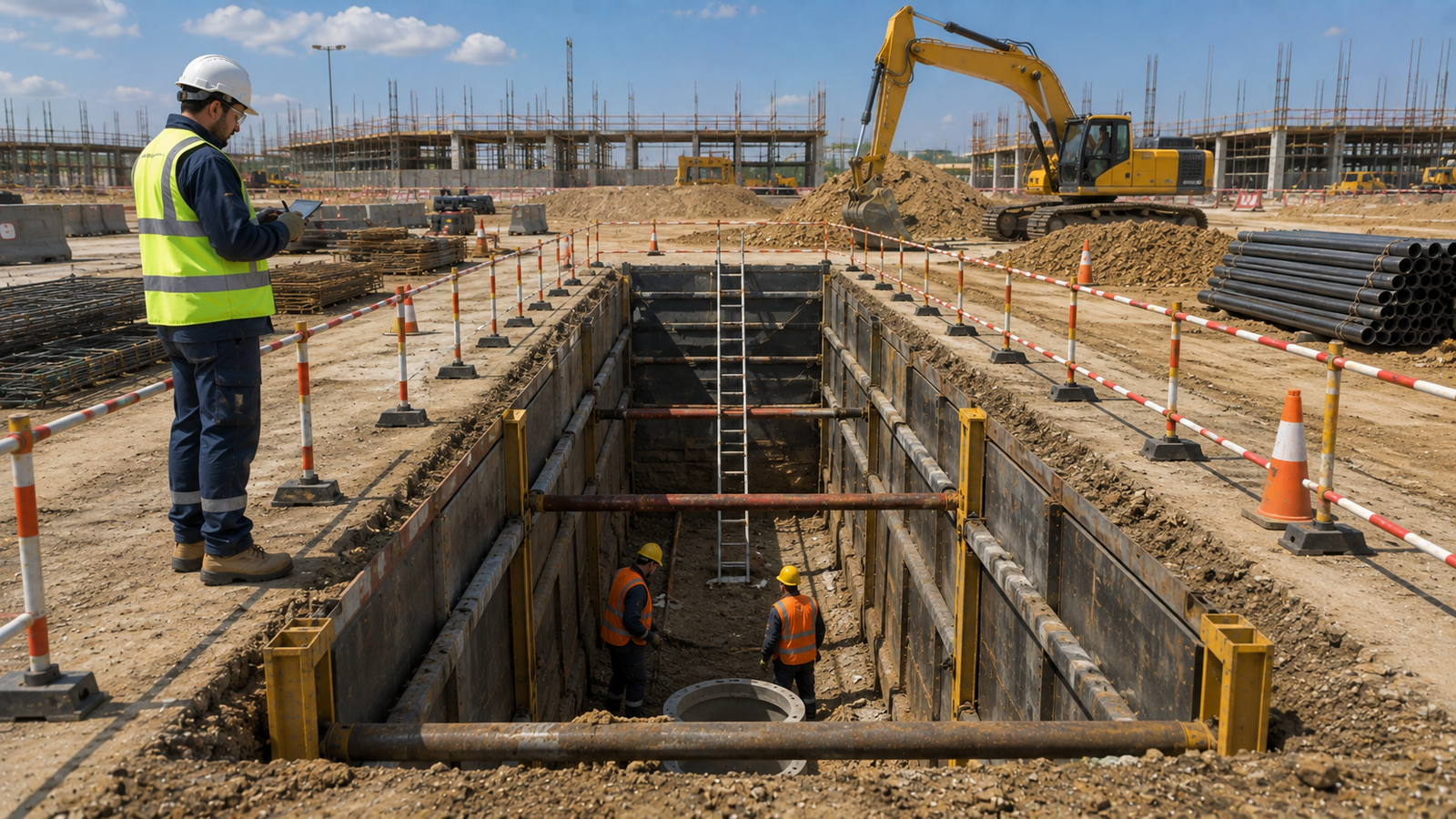
- Cave-ins or collapse of excavation sides
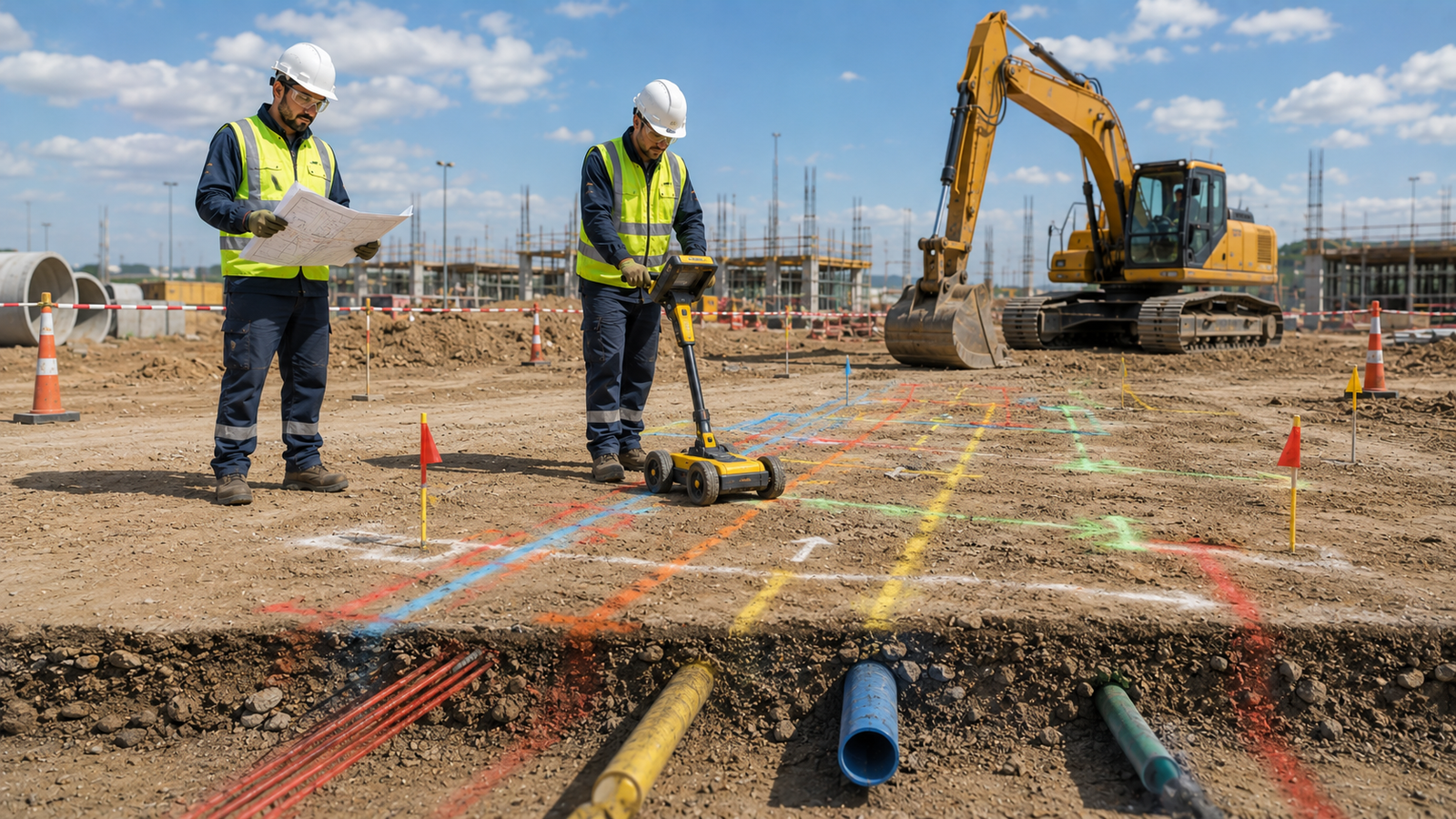
- Contact with underground electrical cables, gas lines, water lines, or other services
- Falls of workers, tools, or materials into the excavation
- Mobile plant or vehicles operating too close to excavation edges
- Water accumulation, flooding, or weakened ground conditions
- Unsafe access and egress
- Falling soil, rocks, equipment, or materials into the excavation
- Hazardous atmospheres where applicable
3. Mandatory Safety Precautions
8 Critical Safety Tips
1. Plan Before Excavation
Review the excavation plan, ground conditions, required permits, protective systems, access arrangements, and emergency procedures before work begins.
2. Identify Underground Services
Confirm the location of underground utilities using approved drawings, detection methods, and site procedures before excavation. Never assume an area is clear.
3. Protect Excavation Sides
Use an appropriate protective method such as sloping, benching, shoring, or an approved protective system according to the excavation conditions and applicable requirements.
4. Protect the Excavation Edge
Provide suitable barricades and warning signs where there is a fall hazard. Keep workers, materials, spoil, and equipment away from excavation edges as required by the risk assessment and site procedure.
5. Provide Safe Access and Egress
Provide suitable access into and out of excavations. Do not climb unstable excavation sides or use improvised access arrangements.
6. Keep Equipment Away from Edges
Maintain a safe separation between excavations and mobile plant, vehicles, and heavy equipment. Follow the site-approved requirements for excavation edge protection and equipment positioning.
7. Inspect the Excavation
Have the excavation inspected by a competent person as required by the applicable procedure, particularly after rain, water accumulation, ground movement, or other changes in conditions.
8. Stop Work When Conditions Change
Stop work and notify the supervisor/HSE team if cracking, ground movement, water accumulation, damaged protective systems, unexpected underground services, or other unsafe conditions are observed.
4. Required Personal Protective Equipment (PPE)
- Safety helmet
- High-visibility vest or clothing
- Safety footwear with suitable slip-resistant soles
- Protective work gloves
- Safety glasses where required
- Additional PPE according to the task-specific risk assessment
PPE must be selected according to the hazard assessment and applicable site requirements. PPE does not replace proper excavation protection, safe access, utility identification, or other primary controls.
5. Emergency & Incident Reporting
- Stop work immediately if ground movement, collapse, unexpected utilities, flooding, or other serious hazards are identified
- Keep personnel away from unstable excavation areas
- Never enter a collapsed or suspected unstable excavation to attempt an improvised rescue
- Raise the alarm and notify the supervisor/HSE team immediately
- Follow the site’s excavation emergency and rescue procedures
- Report excavation incidents, near misses, utility strikes, ground movement, and damaged protective systems without delay
Key Safety Message
Plan the excavation. Identify the services. Protect the sides. Keep people and equipment away from the edge. Stop when conditions change.
External References
For additional technical guidance, consult recognized authoritative sources:
- OSHA – Trenching and Excavation Safety
- HSE UK – Excavations
- HSE UK – Avoiding Danger from Underground Services
Requirements vary by jurisdiction, excavation conditions, protective system, and project requirements. Verify applicable Saudi regulations, client standards, approved excavation procedures, and competent-person requirements before using this resource as formal workplace training.
Download Excavation Safety Toolbox Talk
Use this practical Toolbox Talk during daily or weekly safety briefings.
Download:
Related Toolbox Talks
Explore other published Toolbox Talks from TheHSEVerse:
- Working at Height Toolbox Talk – Learn essential safe working practices for preventing falls and controlling hazards when working at height.
- Ladder Safety Toolbox Talk – Learn how to identify ladder hazards, inspect ladders, and follow safe ladder-use practices to prevent falls.
- Electrical Safety Toolbox Talk – Learn essential electrical safety practices, hazard recognition, PPE requirements, and emergency actions.
- Lifting Operations Safety Toolbox Talk – Learn essential lifting safety practices covering lift planning, equipment inspection, load control, exclusion zones, and communication.