
The Electrical Safety Checklist is a practical inspection tool designed to help HSE professionals, site supervisors, competent persons, consultants, and contractors verify essential electrical safety controls in construction and work environments.
Electrical hazards can result in electric shock, burns, arc flash, fires, equipment damage, and serious injuries. Regular inspection helps identify unsafe electrical installations, damaged equipment, inadequate protection, and poor work practices before they result in an incident.
This checklist provides 30 practical inspection points to help verify key electrical safety controls and document findings requiring corrective action.
What Does This Electrical Safety Checklist Cover?
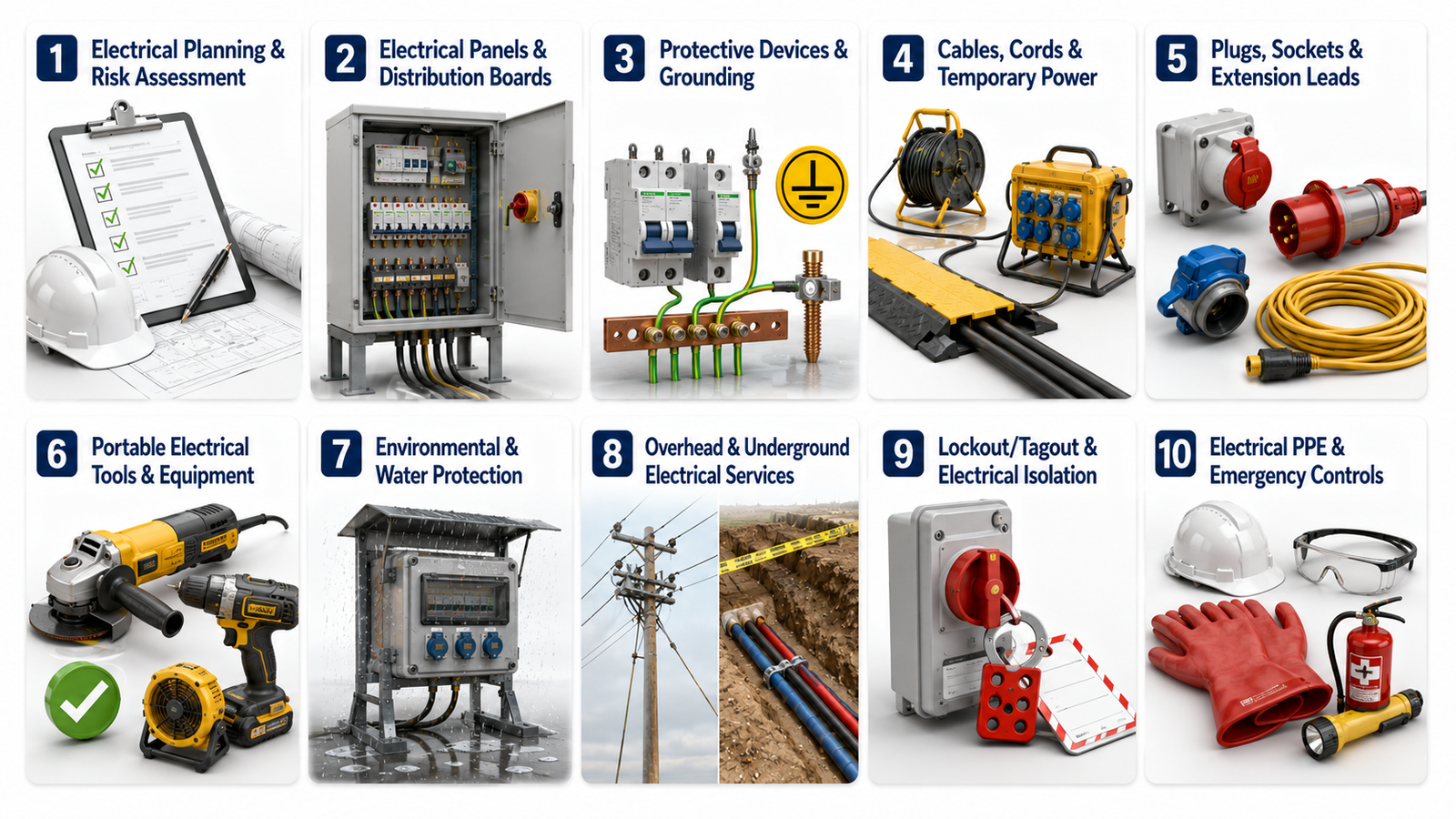
The checklist focuses on important areas including:
- Electrical work planning and risk assessment
- Competent and authorized electrical personnel
- Electrical panels and distribution boards
- Circuit identification
- Protective devices
- Grounding and earthing
- Cables and electrical cords
- Temporary electrical installations
- Plugs, sockets and extension leads
- Portable electrical tools
- Protection from water and environmental conditions
- Overhead power lines
- Underground electrical services
- Lockout/Tagout and electrical isolation
- Verification of absence of voltage
- Electrical PPE and insulated tools
- Electrical room housekeeping
- Safe working clearances
- Warning signs and electrical labels
- Emergency arrangements
- Corrective-action verification
Why Is Electrical Safety Important?
Electricity presents serious risks when electrical systems, equipment, cables or work practices are not properly controlled.
Construction sites can have additional electrical hazards because of temporary power supplies, changing work areas, portable tools, exposed cables, wet conditions and interactions with other construction activities.
Electrical equipment should be properly installed, inspected, maintained and protected. Workers performing electrical tasks should have the appropriate competence and authorization, while isolation procedures should be followed before maintenance or repair work where required.
Regular inspections help identify defects such as damaged cables, exposed conductors, overloaded connections, inadequate grounding, damaged equipment and unsafe temporary installations.
What Is Included in the Checklist?
The downloadable checklist contains 30 inspection points using a simple field-friendly format:
- Yes / No / N/A
- Remarks / Corrective Action
- Findings and observations
- Risk level
- Responsible person
- Target completion date
- Close-out status
- Overall assessment
- Inspector sign-off
- Supervisor / Responsible Person sign-off
The checklist is designed to help identify electrical hazards and document the corrective actions required.
When Should You Use It?
The checklist can be used during:
- Routine construction site inspections
- Electrical installation inspections
- Temporary power inspections
- Electrical panel inspections
- Portable tool inspections
- Contractor electrical inspections
- Pre-work inspections
- Electrical maintenance activities
- Periodic HSE inspections
- Corrective-action verification
How to Use the Electrical Safety Checklist
1. Review the Electrical Work
Confirm that electrical activities have been properly planned and that the relevant risk assessment, procedures and controls are available.
2. Check Electrical Installations
Inspect panels, distribution boards, cables, connections, protective devices, grounding and other electrical installations for visible defects or unsafe conditions.
3. Inspect Portable Equipment
Check electrical tools, extension leads, plugs and portable equipment before use and remove defective equipment from service.
4. Verify Isolation Controls
Confirm that appropriate isolation and Lockout/Tagout procedures are implemented before electrical maintenance or repair work where required.
5. Check the Work Environment
Verify protection against water, mechanical damage, moving equipment, sharp edges and other environmental hazards.
6. Check Electrical Clearances
Ensure safe distances are maintained from overhead power lines and other energized electrical sources.
7. Verify Emergency Controls
Confirm that workers understand the appropriate emergency arrangements for electrical shock, electrical fires and other foreseeable electrical emergencies.
8. Record Findings
Mark each inspection item as Yes, No or N/A and record clear remarks for any deficiency.
9. Assign Corrective Actions
Record significant findings with a risk level, corrective action, responsible person, target date and close-out status.
Download the Electrical Safety Checklist
Download the complete 30-point Electrical Safety Checklist for practical construction and workplace inspections.
Related HSE Resources
Continue building your electrical safety system with related TheHSEVerse resources:
→ Construction Site Safety Inspection Checklist
→ Work at Height Safety Checklist
→ Excavation & Trenching Safety Checklist
→ Lifting Operations Safety Checklist
External Guidance
For additional guidance on electrical safety:
- OSHA — Electrical Safety: Guidance covering electrical hazards, safe work practices, electrical installations and protection requirements.
- NFPA — Electrical Safety: Industry guidance and standards addressing electrical safety and workplace electrical hazards.
Important Safety Disclaimer
This checklist is provided as a practical safety inspection aid. It does not replace applicable legislation, regulatory requirements, project-specific HSE requirements, risk assessments, method statements, approved procedures, electrical codes, manufacturer instructions, or competent professional judgment.
Users should adapt the checklist to the specific project, electrical systems, equipment, activities, hazards, contractual requirements, and applicable legal and regulatory requirements.
Always verify applicable local legal and regulatory requirements before using this checklist as part of a formal compliance inspection.